


Without a clear sales qualification framework, reps pitch too early—before confirming fit.
Sales leaders need a repeatable qualification model to focus reps on winnable deals, save time, and raise deal quality.
Looking to upgrade your qualification? Here’s the SCOTSMAN framework (aka the SCOTSMAN qualification model) and how it lifts high-ticket close rates.
What is the SCOTSMAN Sales Methodology?
SCOTSMAN is a lead-qualification framework (originating at Advance) used for deeper, early-stage analysis before prospects progress further in your sales funnel.
The full acronym stands for solution, competition, originality, time, size, money, authority, and need.
The SCOTSMAN model is mainly used during qualification, but reps can keep the framework in the back of their minds throughout the sales cycle. For complex sales situations, this model helps salespeople see beyond the superficial and identify key markers of a good customer (and weed out the bad ones).
In each section of the SCOTSMAN sales methodology checklist, reps will ask qualifying questions. The answers normally fall into one of these three options:
- Everything’s a-okay, the lead is qualified and fits your ideal customer profile
- There are some obvious issues from the get-go, meaning the lead isn’t qualified and the deal doesn’t move forward
- There are problems that need more clarification, there’s still a chance the deal will go through but these issues need to be addressed first
So, how exactly does qualification work with the SCOTSMAN sales methodology?
The SCOTSMAN Sales Methodology Checklist
SCOTSMAN is an acronym for the types of questions your reps need to ask when qualifying new leads.
Here’s what SCOTSMAN stands for, along with qualifying questions your reps can ask to get clear answers for each category.
S = Solution
Your lead has a problem they’re trying to solve. The first aspect of SCOTSMAN is to determine if you have the solution they’re looking for.
Here’s what this might look like in a sales conversation:
- How did you hear about us?
- Talk me through some of the challenges you’re looking to solve.
- What’s your current process for dealing with [challenge]?
- What are some must-have features for a new solution?
C = Competition
Most buyers evaluate alternatives. Use SCOTSMAN’s Competition step to map current tools, gaps, and viable options.
Some good questions to ask at this stage of the SCOTSMAN model would be:
- What solution are you currently using?
- What’s working or not working with your current solution?
- What made you choose that particular solution?
- What are your other options to fix this? Do you have a plan B?
- Are you considering building your own solution?
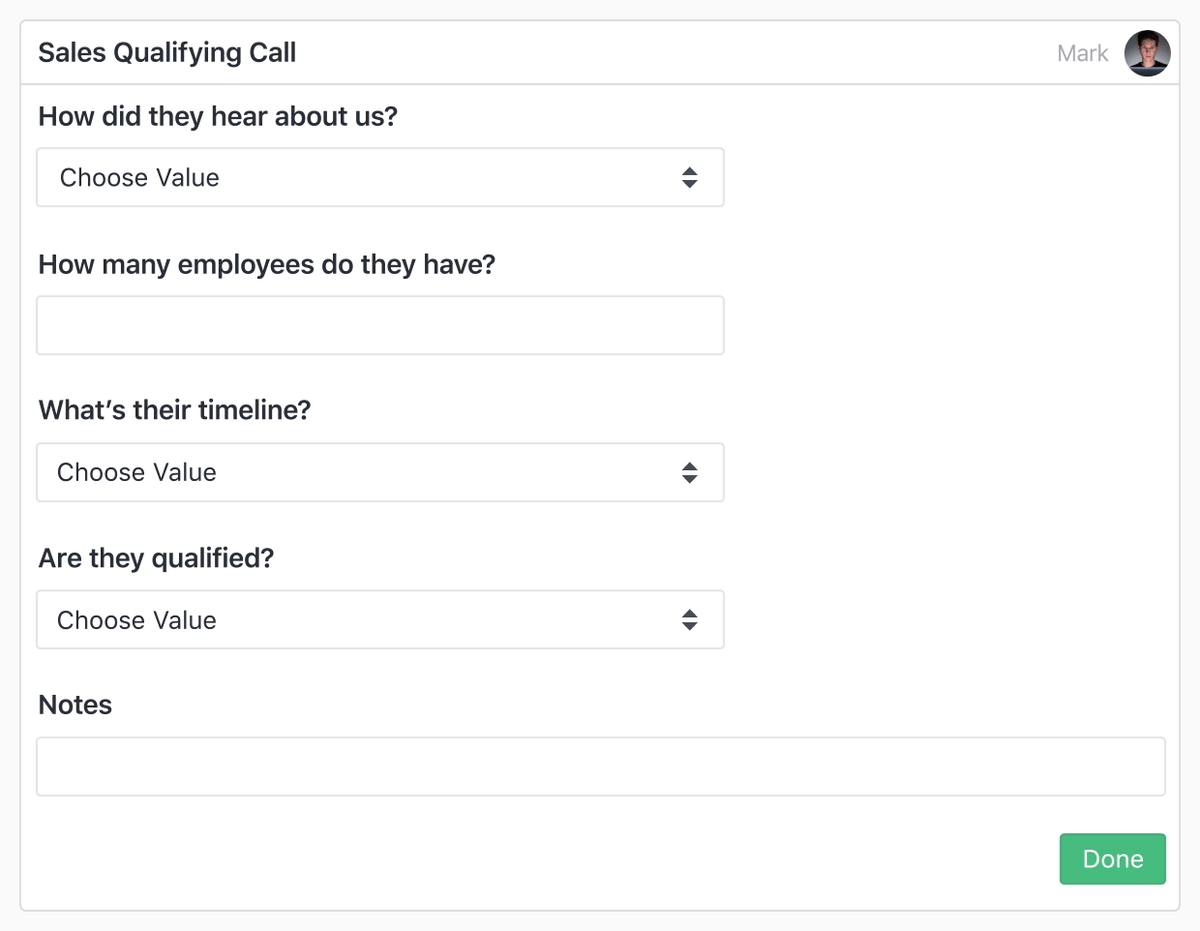
Pro tip: Structure your sales qualification process inside your CRM using Close’s Custom Activities. Define a set of questions that reps need to complete on their calls, and make sure all incoming deals align with your ideal customer profile.
O = Originality
Now you know who you’re competing against. It’s time to outshine the competition by proving your unique ability to solve their problem.
Ask these questions to reveal and highlight the pieces of your solution that could make the biggest impact on this lead:
- What kind of results would you expect from a new solution?
- What are some nice-to-have features you’d like to see in a new solution?
- What’s the main metric your team uses to track success?
- If you found the right solution, what would be the effect on that metric?
- What would a [percentage] boost in [metric] mean for you?
T = Time
Getting the timing right is key to closing the deal. This aspect of the SCOTSMAN sales methodology checklist will tell you if the lead is just tire kicking, or if they’re actually interested in a solution.
- Do you have a contract with your current solution? When is it up for renewal?
- When do you need to implement a solution?
- If this problem isn’t solved in [time period], how would that affect your team/company?
- Where is this on your list of priorities?
- Why is this a priority for you now? Why not last year or last quarter?
- Is this a priority for your whole company?
- Do you foresee your team implementing a new solution by [amount of time of your average sales cycle]?
S = Size
The size of the opportunity can tell you whether or not this lead is a good fit. For example, if your solution is made for small teams but this lead is an enterprise company (or vice-versa), your solution probably isn’t right for them.
So, ask the right questions about size:
- How many users are on your current solution?
- How many people are on your team?
- Which teams would be using the new solution?
- How many users would you ideally like to have?
Pro Tip: Skip this step in the sales process by asking questions about size in your inbound lead forms. Use one or two of the questions above when new leads sign up for a trial or request to contact your sales team—this will help you filter out unqualified leads before they enter your sales team’s pipeline.
M = Money
Many times, budget is the make-or-break aspect of the deal. Do they have enough money to spend on your solution, or is their budget completely unrealistic? If they can only afford a lower pricing plan, will that fit their needs? What if they’re only interested in a discount?
Pro Tip: If you’ve asked the right questions about the competition, you might already have an idea of their budget. For example, if you know they’re currently using a competing solution on a plan that costs $59 per user per month, you can assume they’re looking for a solution that’s around the same price.
While most people won’t give you an exact number when you talk about budget, here are some questions you can ask to draw out a rough idea of where they are in terms of money:
- Do you feel your current solution is a good value for the price?
- At what price would you consider a [product] to be so expensive that you wouldn’t consider buying it?
- At what price would you consider a [product] to be so cheap that you would doubt its quality?
- At what price would you consider a [product] to be a great deal?
- The last time you purchased something that was outside your budget, what was the process for budget allocation?
- What kind of ROI would you expect on the dollar?
A = Authority
Who are you speaking to at the company? Do they have the final say in the purchase, or are they one of many who need to sign off on the deal? This is where authority comes into play.
Here are some basic questions about decision-making that you’ll want to ask:
- What role do you play in making the final decision?
- When was the last time you purchased a similar product? Walk me through that process.
- Who else needs to sign off on this deal?
- Who else on your team/in the company is invested in finding a solution to [problem]?
- What concerns are they probably going to have about the purchase?
- Who’s going to be responsible for implementing a new solution?
- Does your company have a list of criteria for software vendors? Who made that list?
- If I could give you a solution that fits what you’re looking for, who else would need to get involved in this process?
N = Need
The final aspect of the SCOTSMAN sales methodology checklist is need. You want to make sure the prospect understands their own needs well, and that their needs align with what your solution can do for them.
At this point, use the right questions to make sure they can articulate their needs clearly, and prove that your product fits their needs:
- How exactly would you expect a new solution to affect the challenges you’re facing?
- What motivated you to look for a solution now?
- How is [challenge] affecting your team? How is it affecting your everyday work routine?
- Which software integrations are a must for a new solution?
- Talk me through some of your team/company’s upcoming goals.
- What are the main obstacles to these goals when it comes to [area that relates to your product]?
- What would success look like to you with a new solution?
SCOTSMAN Model Advantages and Disadvantages
Only you can decide which qualification model works best for your team and your market. The SCOTSMAN model is great for complex sales situations where deeper qualification is necessary.
Here are the benefits and challenges you should consider:
Benefits & Advantages of the SCOTSMAN Sales Model
What advantages do teams see with the SCOTSMAN model?
- New leads are more deeply qualified before entering the sales process: When your team qualifies using the SCOTSMAN model, they’ll be more likely to close deals that go beyond the qualification stage
- Gives new reps a model to replicate with qualifying calls: When onboarding new sales hires to your team, they’ll already have a clear place to start when qualifying new leads
- Base forecasts on real data rather than assumptions: With deeper qualification, it’s easier to see which deals are more likely to close. This leads to more accurate sales forecasts
- Can be used to continue qualifying throughout the sales process: SCOTSMAN qualification doesn’t have to end at the qualifying stage—the framework can help reps determine how likely a deal is to close at each stage of your sales pipeline.

Challenges & Disadvantages of the SCOTSMAN Sales Model
No model is without its challenges. Here’s what you’ll need to consider before implementing the SCOTSMAN model:
- Very detailed qualifying models can make your reps sound like robots: With such precise, strict, and elaborate rules for qualification, your reps may become a bit monotonous in their qualification process—rather than a conversation, the process sounds more like a slightly boring interrogation. To counter this, make sure to ask sales questions the right way
- Can lengthen the qualification process: Not all deals need to be so heavily qualified before entering the funnel. If you’re dealing with a quick sales cycle or a less complex deal structure, your reps don’t need to go through every step of the SCOTSMAN model to know if the deal is a good fit. In sales, you want to ask for the close early, ask often, and embrace the no
What it Takes to Win at Qualification
All qualification questions can be summed up with these two:
- Can you help them?
- Can they help you?
When you ask the right questions, you’ll make sure that your solution fits what the prospect is looking for, and that their timeline and budget fit what you need to see in an ideal customer.
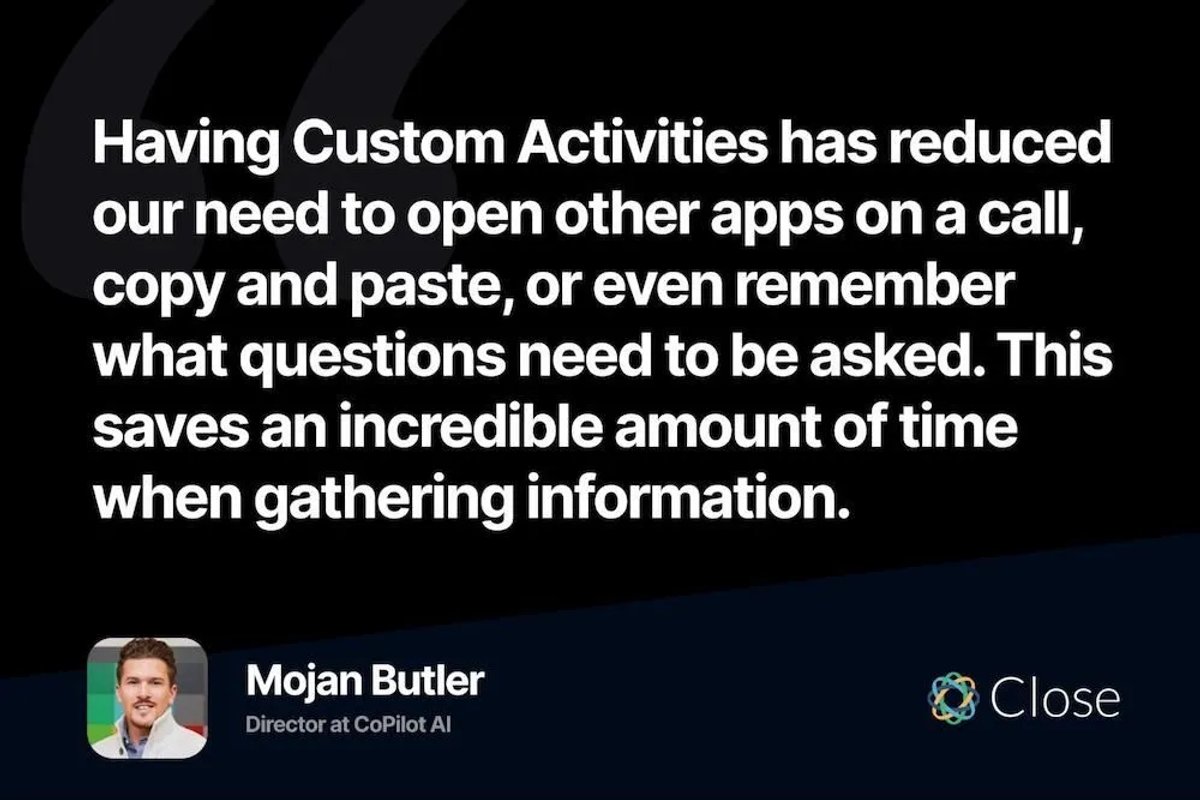
Looking for a way to structure your team’s qualifying calls? Using Custom Activities in Close, you can define your own custom qualifying process that each rep uses during calls with customers.
You set the questions, and create a structured process for discovering and logging key qualification data.
Start your free 14-day trial of Close to test it out for yourself!