If you sell business-to-business (B2B), you’re probably familiar with customer relationship management (CRM). What you might not know is which CRM software is best for B2B sales. Enter our guide to choosing the right B2B CRM software for your needs.
Maybe you're only familiar with the one CRM tool your company already uses. Maybe you've tried a few different "solutions" but haven't found one that suits your department's unique sales process. Whatever the case may be, you're looking for a new app to invest in.
Well, you've come to the right place. In this comprehensive article, I'll explain why B2B CRM software is so important in 2026, and how to choose the right B2B CRM system for your organization. Then I'll review seven B2B CRM platforms you should consider.
Sound like a plan? Great, but first I want to level with you—as a B2B CRM platform ourselves, we're a little biased. We'd love to invite you to check out a demo of Close and see first-hand how our CRM will help your sales team get outsized results today.
Why is B2B CRM Software so Important?
Fact: Every sales team needs CRM software.
How else are they going to store contact information, automate outreach campaigns, and generate sales reports? Old school spreadsheets just don't cut it anymore. This isn't 1995.
But here's the thing: B2B organizations need different tools than their B2C counterparts. As such, B2B businesses should invest in different CRM platforms. It only makes sense.
Once you find the right CRM solution for your B2B sales team, you'll experience better…
Learn how to effectively manage your projects with the help of specialized contractor project management CRMs.
Sales Rep Productivity
CRM software turbocharges salespeople.
First, it centralizes customer data and insights, which makes them incredibly easy to find. Reps won't waste time digging through email threads to find information. They'll simply log into their department's CRM, use the tool's search functionality, and find what they need.
Top CRM platforms (like the ones I review in this article) include marketing automation tools as well. This helps reps automatically capture lead details, which minimizes data entry. It also allows them to send emails and texts—even implement entire sales workflows—on autopilot.
Team Communication
B2B sales is a team sport—don't let anyone tell you different.
Sure, most reps work independently to generate leads, nurture prospects, and close deals. But at the end of the day, reps within a sales department strive toward the same goals.
That's why the best sales teams work to facilitate communication between team members. Doing so enables their salespeople to share ideas, strategies, templates—you name it.
A quality B2B CRM will streamline internal communication for your team. Sales notes and documents are easily passed back and forth. Updates are sent in real time. Some apps even include social media-style message boards to help reps build relationships with each other.
Customer Satisfaction
If you want to make more sales, improve the B2B customer experience you provide.
Think about it: Better experiences create happier customers. Happier customers buy more often and encourage their social circles to do the same. Both of these things drive revenue.
But how do you create the top-level experiences your customers crave? A B2B CRM will help. Use it to catalog prospect and customer information, so they don't have to repeat themselves ad nauseam. Or automate your follow-up messages, so they feel like your top priority.
These things may sound simple, but they can have a profound effect on customer retention. And the higher your retention metrics are, the more money your company is likely to make.
Sales and Revenue
Your B2B CRM will help you make more sales and earn more money. Like, a lot more.
You can use it to analyze and manage your sales pipeline. Doing so will help you pinpoint ready-to-buy prospects. You can then focus your attention on them and shorten sales cycles.
You can also use your CRM to generate sales reports. Once you analyze said reports, you'll know which sales activities produce the best results and can double down on them.
Greater rep productivity and happier customers, both of which we talked about in the sections above, will naturally improve your revenue numbers, too. Win!
Ready to revolutionize your sales tactics? Explore our curated list of sales productivity tools for a game-changing advantage.
How to Choose a B2B CRM System
Your CRM is essential to the success of your B2B sales department. The question is, how do you choose the right tool? It's pretty easy. Just ask yourself these three questions:
Does This CRM Have the Features I Need?
Before you do anything else, check out each platform's features. Will the tool do what your sales team needs it to do? If not, you should cut it from your list.
Every CRM will help you store customer information. (It wouldn't be a CRM if it didn't.) But you want more than data storage capabilities. You want a fully-featured app that will help you accomplish a wide variety of tasks, from lead generation to future sales forecasting.
Decide which CRM features you need. Then only consider CRM solutions that have them.
Will This CRM Integrate with My Other Tools?
Make sure that the B2B CRM you invest in can integrate with all of them. Otherwise, the app will only cause you grief.
So, what's in your department's tech stack?
You might use Jotform to create custom webforms for your company's website. Or Mailchimp to level up your email marketing game. Or Vanillasoft for lead scoring purposes. The best CRM tool for your B2B organization will easily connect to all of these applications.
(Note: The CRMs you're interested in might not connect directly to your other tools. Start by checking for native integrations first—those are typically faster, more reliable, and easier to maintain. If you’re dealing with a niche tool that doesn’t have a direct integration, you can use a third-party connector as a fallback.)
Can I Actually Afford This CRM?
It's not a super fun topic, but we need to talk about pricing.
B2B CRM software is almost never free. Some of the apps in this category are actually super expensive. Make sure your sales department can afford them before you fall in love.
The key is balance. You need to find a solution that solves your business needs without breaking the bank. The easiest way to do this is to list must-have features and nice-to-have features. Then scour the internet for tools that fit your budget and include the necessities.
If you happen to get a few bonus features, too … Well, we all get lucky now and again.
In optimizing your B2B CRM strategy, consider incorporating elements of project management methodologies like Agile or Waterfall. These can bring structured efficiency to managing customer relationships, aligning with your CRM goals.
7 Best B2B CRM Solutions (Built for B2B Companies)
Now that I've covered the benefits of B2B CRM software, and explained how to choose the right tool for your sales team, let's explore the specific options available for B2B businesses.
Below, I review seven CRM systems. Each will help you connect with prospects, nurture them through the various touchpoints in your sales process, and close deals. I also cover product disadvantages so that you know exactly what you're buying before you actually buy it.
I've got a ton of valuable information to share, so let's get to it.
1. Close

Best for: Startups and small businesses
G2 rating: 4.6 stars / 591 reviews
Close combines ease of use and powerful CRM features with an affordable pricing structure, making it a fantastic option for startups and small businesses. Invest in a proven tool that will help your sales team do exactly what it's supposed to do: make sales and drive revenue.
The Pros of Close:
- Ease of use: It doesn't matter how feature-rich your B2B CRM is. If it's a pain in the neck to use, you and/or your reps won't use it. Fortunately, Close takes ease of use seriously. Get up and running in less than an hour. Master the platform in a few more.
- Communication: Close goes beyond simple contact management and allows you to converse with your target audience in a bunch of different ways. Take advantage of the system's Power and Predictive dialers to make more phone calls in less time. And build entire email and text messaging sequences using the tool's customizable templates. Then study your analytics dashboards to see what's actually working.
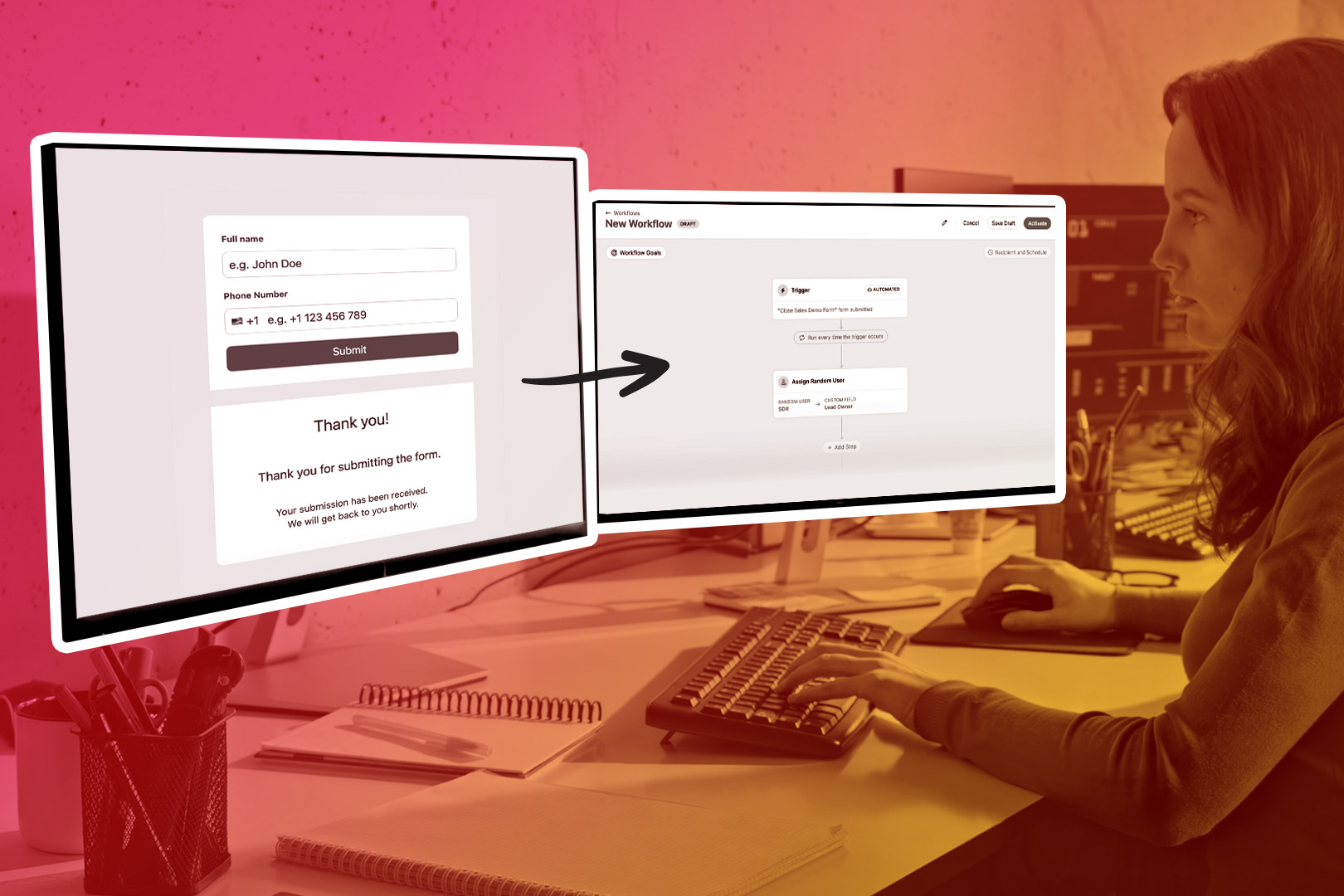
- Automation: Modern sales teams need automation. Close offers robust automation capabilities, especially with its Workflows feature. Create comprehensive sales workflows that encompass call reminders, email and text send, and more. Automate the entire process, allowing it to operate seamlessly without constant manual intervention. Furthermore, easily replicate your most effective workflows and share them with your team members, enabling everyone to harness the benefits. In summary, Close's automation empowers you to engage with a larger pool of potential customers efficiently and with minimal time investment.

- Call Assistant: Call Assistant feature is a neat addition, offering helpful support during calls, although it's just one of many tools within Close's robust system.
- Integrations: As important as your department's CRM is, it's not the only tool your sales team uses on a day-to-day basis. One of the best things about Close is that it integrates with a ton of other apps, including Gmail, Calendly, and Zoom—plus a growing library of native integrations.”
- Customer support: What do you do if you have a question about Close? Reach out to the Support team, which is ranked in the top one percent of all SaaS companies. You probably won't have to contact them often, given how intuitive the Close interface is. But it's nice to know that you'll always get the help you need if/when you do.
- Mobile app: Close also has a mobile app, which means you can check in on your pipeline, follow-up with customers, and perform a variety of other sales tasks from the convenience of your phone. Trust me, you're going to get used to the freedom quickly. (The Close app is available for both, iOS and Android devices)
The Cons of Close:
- No free plan: Unlike other B2B CRMs, Close doesn't offer a free plan. If you work for a cash-strapped company, this might present a problem. (Honestly, most free plans aren't that great anyway. And Close does offer a 14-day free trial.)
- Made for sales teams: Close was specifically designed to help salespeople make more sales. So, your company's marketing team probably won't get as much use out of the tool. If that's an issue for you, consider one of the other CRMs below.
How Much Does Close Cost? Close offers four pricing tiers tailored to different business needs:
- The Solo plan starts at just $9 per user per month (billed annually) and is designed for individual users managing up to 10,000 leads.
- The Essentials plan starts at $35 per user per month (billed annually), offering unlimited users, leads, and pipelines—ideal for small teams.
- The Growth plan begins at $99 per user per month (billed annually) and unlocks advanced automation, email tools, call features, and custom activities.
- The Scale plan starts at $139 per user per month (billed annually), adding powerful admin controls, predictive dialers, and in-depth reporting features.
Naturally, higher tiers unlock more advanced CRM functionality, customization, and team management features.
Sign up for a free 14-day trial of Close today to see if it's the right B2B CRM for you!
2. Zoho CRM

Best for: Custom sales processes
G2 rating: 4.0 stars / 2,442 reviews
Want to send emails or manage your company's social media presence? Maybe you need access to a quality project management tool, or an app you can use to balance company books. Whatever the case may be, Zoho has a solution for you. But in this article, we're going to focus exclusively on Zoho's popular CRM offering.
The Pros of Zoho CRM:
- Affordability: You know what's awesome? Saving money. Zoho CRM is one of the more affordable solutions in the B2B CRM space. (We'll talk more about this below.)
- Customizations: Zoho CRM can be adjusted to fit your sales team's exact requirements. If you're uber particular about your department's sales funnel, and need to view it in specific ways, you'll probably love how malleable this tool is.
- AI power: Why handle tedious sales tasks yourself when you can have the robots do them for you? Zoho includes an AI assistant named Zia, who can take notes and score leads. Zia will even analyze your sales processes and suggest improvements.
- Sales reports: Zoho's reporting capabilities are also top-shelf. Access 40+ pre-made reports, or design your own using the specific metrics that matter to you. You can use Zoho to forecast future sales, too, which is handy.
The Cons of Zoho CRM:
- Workflow automation: Zoho CRM is equipped with automation, which is great. But in my experience, the tool isn't equipped to handle complex workflows. This won't be a problem for every sales team. But it's definitely a minor con worth mentioning.
- Feature overload: Zoho claims its CRM tool is designed for small businesses. But the platform includes so many features—many of which small businesses don't need— that some folks might find it overwhelming. Just bear that in mind.
How Much Does Zoho CRM Cost? Zoho CRM offers four different plans, ranging from $14 a month, paid annually, to $52 a month, paid annually. Higher-priced plans include more features, of course. But even $52 a month (or $65, paid monthly) is really cheap.
3. Microsoft Dynamics 365

Best for: Microsoft fanboys (and girls!)
G2 rating: 3.8 stars / 550 reviews
t's one of the biggest companies in the world, and responsible for must-have software applications like Outlook, Word, Excel, and PowerPoint. You might not realize, however, that Microsoft also offers a powerful CRM tool. If you sell for an enterprise company, and already use Microsoft products everyday, check out this app.
The Pros of Microsoft Dynamics 365:
- Enterprise features: Big companies have different needs than little companies. Dynamics 365 includes all of the CRM features that enterprise organizations need. I'm talking about lead generation, pipeline management, and even B2B marketing tools.
- AI assistant: Use Dynamics 365's AI-powered platform to dig up customer information, automate tasks and workflows, and send emails. (Then hope that the Microsoft Dynamics AI is a lot more civil than the Microsoft Bing AI. Savage.)
- On-site options: Looking for an on-site CRM solution for your sales team? Microsoft Dynamics 365 fits the bill. (It's the only CRM I review in this article that does, actually.)
- Integrations: Dynamics 365 is a Microsoft product, so it naturally integrates with other Microsoft apps. This is a big bonus if you already use Outlook, Excel, etc., everyday.
The Cons of Microsoft Dynamics 365:
- Learning curve: Dynamics 365 will help you do a lot of different things, from implementing marketing campaigns to predicting future sales. But it's not exactly easy to do all of these things. Expect a slow ride down a steep learning curve with this tool.
- Platform cost: As I cover below, Dynamics 365 can be used for a modest monthly fee. But said fee will only give you access to basic features. If you want to deploy the full power of this B2B CRM, expect to pay a few hundred dollars a month, at minimum.
How Much Does Microsoft Dynamics 365 Cost? To use this CRM, you'll need to pay at least $65 a month. Just know that this price point will only give you access to basic functionality. The full shebang will cost you hundreds of dollars more.
4. HubSpot CRM

Best for: New and/or broke sales teams
G2 rating: 4.4 stars / 10,417 reviews
HubSpot CRM is a popular business tool, helping companies accomplish a range of marketing, sales, and customer service tasks. In this review, I'll mostly focus on the sales-related features. But you should know that HubSpot's capabilities extend beyond this use case.
The Pros of HubSpot CRM:
- Free plan: I can't talk about HubSpot without mentioning the tool's free CRM offering. That's right, HubSpot CRM will cost you $0 a month, which is sweet. (Just know that the free CRM won't give you access to all of the fancy sales and marketing features.)
- One-stop-shop tool: If you're willing to pay the monthly fees, HubSpot will help you do, well, just about everything for your business. Access all of the Marketing, Sales, Service, and Operations tools you'll ever need from one convenient location.
- Automation: I'm a fan of HubSpot's automation capabilities, too. Handle pesky admin tasks, send emails and text messages, and build complex workflows inside this software. Then keep track of your results with the app's built-in reporting dashboards.
- iOS and Android apps: Lastly, HubSpot has iOS and Android apps, which means users can check in (and receive notifications about) their various sales campaigns from anywhere.
The Cons of HubSpot CRM:
- Pricing: Wait, I thought you said HubSpot was free? HubSpot's CRM is free. Its Sales and Marketing hubs, on the other hand, are super expensive. If you just need a way to store contact information, this isn't a problem. If you want to empower your sales reps with a fully-featured tool, make sure you have the cash.
- Customizations: Unfortunately, HubSpot isn't a super customizable solution. Looking for a tool you can strip down, build up, or otherwise change? Look elsewhere.
How Much Does HubSpot CRM Cost? One more time, HubSpot CRM is free—woohoo! Its Sales Hub will cost you at least $20 a month (starter level which includes only basic features). And if you want access to all the features, you will need to pay $1,500 per month (includes 10 users). So it’s not the cheapest platform on the planet, that's for sure.
5. Salesforce

Best for: Enterprise-level companies
G2 rating: 4.3 stars / 15,062 reviews
Founded in 1999, Salesforce is the OG in the world of CRM software. 24 years later, it's still the biggest, most well-known tool in the space. But is it right for your sales team? Depends.
The Pros of Salesforce:
- Contact management: If your CRM doesn't allow you to store contact information, you don't have a CRM. Salesforce excels in this area. Use it to keep track of leads, prospects and customers; segment records based on demographic data, view your communication history with every person in your database, and more.
- Strong automation: This is another area where Salesforce knocks it out of the park. Track your company's Facebook, LinkedIn, and other social media pages. Build and schedule complex email marketing campaigns. Receive real-time deal updates to simplify pipeline management. And build entire sales workflows that run on autopilot.
- Einstein AI: The Salesforce AI bot is adequately named Einstein. Why do I say that? Because it will automatically collect sales data, score leads, and identify new opportunities. It will then coach your reps to produce better results. Yay, technology!
- Reporting: How do you know if your sales strategy is working? If you're a Salesforce user, you can access your analytics dashboard, then view your metrics. Even better, Salesforce includes drag-and-drop functionality to make custom reports.
The Cons of Salesforce:
- Break the bank: Salesforce will help you complete almost any CRM-related tasks. Just know that it will charge you through the nose for the privilege. Some features cost thousands of dollars a month to use. That's why I only suggest it for enterprise brands.
- Scratch your head: If you want an easy-to-use tool, run away. Far, far away. Salesforce is a lot of things, but "easy to use" is definitely not one of them. You'll need to work hard to learn how to use this CRM, then work hard to train your team.
How Much Does Salesforce Cost? Become a Salesforce user for just $25 to $330 per user/month. That's not too bad, right? Here's the catch: Those prices don't include every feature. You'll need to pay an extra $5 to $30,000 a month for those. Ouch!
6. Pipedrive

Best for: Small, tech-wary sales teams
G2 rating: 4.2 stars / 1,648 reviews
If you manage a small sales team, you might want to consider Pipedrive for your B2B CRM. It's easy to use, fairly priced, and has a few features that will streamline the sales process.
The Pros of Pipedrive:
- Pricing: Pipedrive won't cost you an arm and a leg, which makes it a great option for small and/or budget-conscious sales teams. Access all of the features inside the Pipedrive platform for less than $150 a month, billed annually. (More on this below.)
- Simplicity: You won't need to dedicate weeks or months to learning this CRM application. It's pretty easy to use. Sign up, jump in, and start making sales. One reason is because of Pipedrive's visual pipelines, which simplify many sales activities.
- AI capabilities: Pipedrive users get access to a nifty sales assistant, too. Use the tool to analyze past sales performance, then receive recommendations you and/or your team can implement to close more deals in less time. Nice!
- Add-ons: Want more than Pipedrive's standard platform has to offer? Just pay for a few add-ons. Doing so will give you access to chatbots, web analytics, more detailed email marketing features, project management tools, and more.
The Cons of Pipedrive:
- App speed: Sadly, Pipedrive isn't known for its speed. You'll definitely experience lag throughout the day, which is frustrating when you're trying to close deals quickly.
- Team scalability: Pipedrive is great for small sales teams. But if you ever expand operations, you'll probably need a different tool, as this one doesn't scale well. You may want to invest in another B2B CRM now, so you don't have to switch later.
How Much Does Pipedrive Cost? As mentioned earlier, Pipedrive is an affordable tool. The "Essentials" plan will only cost you $9.90 a month, billed annually. The "Power" plan will cost you $49.90 a month, billed annually. All other plans fall somewhere between these two figures. The Pipedrive add-ons aren't crazy expensive either. Expect to pay $6.70 to $41 a month extra for the additional features. All in all, a rock-solid pricing structure.
7. Freshsales

Best for: Simple, AI-powered sales processes
G2 rating: 4.5 stars / 1,061 reviews
Finally, we have a Freshworks product that uses a variety of AI and automation tools to simplify sales. Want to work harder, not smarter? Take a look at this B2B CRM.
The Pros of Freshsales:
- Communication: Freshsales excels in the communication department. Users can call, email, and even chat with potential customers in real time with this tool. Freshsales integrates with Zoom, too, which makes it easy to host virtual sales meetings.
- AI and automation: Can we talk about Freddy, the Freshsales AI bot? This is one of my favorite features because it helps users with lead scoring, forecasting, and reporting tasks. You know, the stuff you need to get done, but never really want to do.
- Web forms: Does your company have a robust inbound sales strategy? Then you'll appreciate the Freshsales web forms, which can be added to any website. Once a lead fills in their information, the data will automatically be added to your CRM.
- Reporting: Users can use Freshsales to create custom sales reports, too. Decide which metrics you care about, then study the specific analytics that match.
The Cons of Freshsales:
- Cost: Freshsales offers a free plan, which I think is awesome. It's not all that powerful, though, so you'll need to upgrade sooner than later. Make sure you have the budget.
- User interface: I'm not a huge fan of the Freshsales "look." Is it terrible? Nope. It's just kind of blah. Staring at blah for eight hours a day is less than ideal.
- Use cases: Freshsales was designed for sales teams. If you need marketing and/or customer support tools in addition to the sales tools that most CRMs offer, you'll want to invest in a different app. Freshsales is more of a one-trick pony.
How Much Does Freshsales Cost? Good news: Freshsales is pretty affordable. Paid plans start at $9 a month, per user, billed annually, and rise to $59 a month, per user, billed annually. Just know that these prices won't get you access to the platform's document builder or e-signature features. You'll need to pay extra for those capabilities.
Empower Your Sales Reps with Stellar B2B CRM Software
Every B2B company needs a proper B2B CRM—at least, if they want to make sales.
Once you invest in this kind of tool, your B2B sales team will become more productive, communicate with each other more effectively, achieve higher customer satisfaction metrics, and most importantly, make more sales and drive more revenue than ever before.
Of course, you need to choose the right CRM for your unique team and processes. One of the solutions above should fit the bill. I encourage you to test each of them out if you can.
I'll be honest though, we're a little biased. We'd love to invite you to try Close.
Our sales-oriented CRM is perfect for startups and small businesses because it's easy to use and ultra powerful. This means you can be up and running with the tool in as little as an hour, and still have access to all of the features you need to close deals quickly and consistently.
Start your free 14-day trial of Close today to experience our industry-leading platform yourself!